Boat lift cable repair
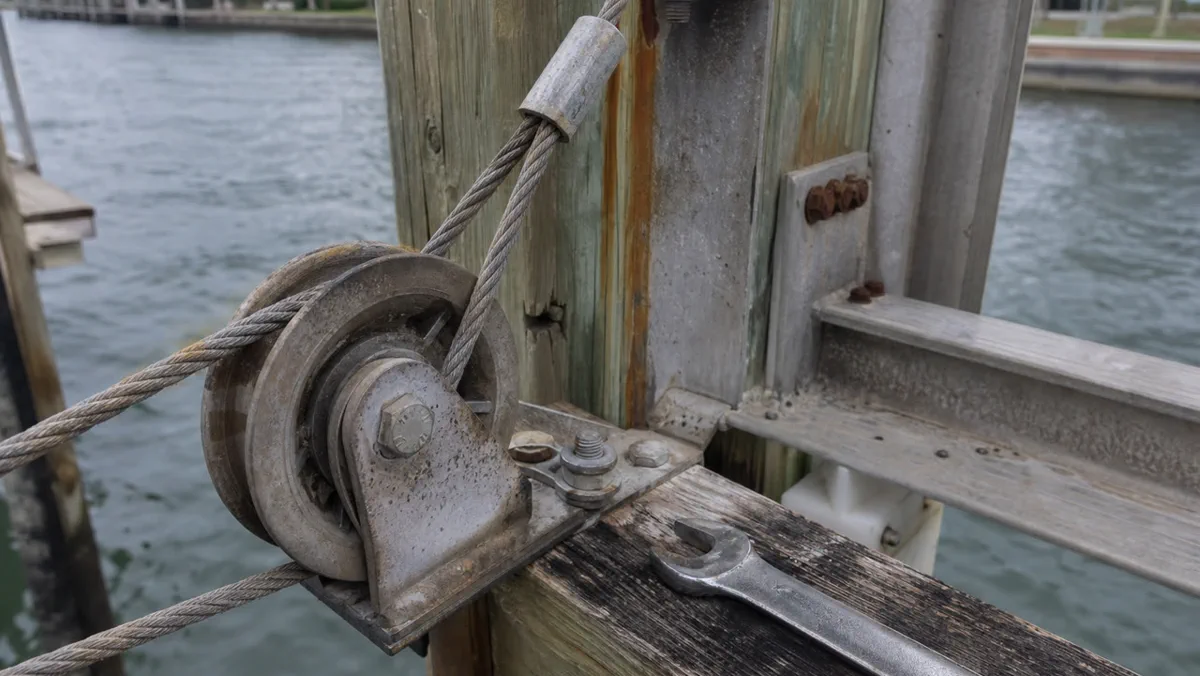
Cable fray, rust, uneven winding, bird-caging, or slack should be photographed from the drum, pulley, and cradle angles.
Cable, motor, bunk, and cradle repair planning
Boat lift repair in Naples usually comes down to a few common problem categories.
This page focuses on the dock-side problems owners ask about most: cables, motors, cradles, bunks, corrosion, access, and storm wear.
Repair categories
Cable fray, rust, uneven winding, bird-caging, or slack should be photographed from the drum, pulley, and cradle angles.
A motor that hums, stops, trips, runs slowly, or fails intermittently needs clear symptom notes and qualified electrical review when required.
Grinding, squealing, rough winding, visible corrosion, and loose hardware can point to wear that should be assessed before regular use continues.
Shifted bunks, uneven boat contact, cradle tilt, and hardware movement affect how the boat sits on the lift and what should be reviewed.
Before and after heavy weather, homeowners often ask about cable condition, boat position, loose hardware, and whether the lift looks ready for regular use.
If a property sits unused, describe when the lift last worked, what changed, and whether power, boat position, or weather may have contributed.
Next step
Questions
Cable, pulleys, motors, switches, bunks, cradle alignment, guide posts, hardware, and dock access are common starting points. The exact work depends on lift condition, cable path, electrical behavior, corrosion, boat load, access, and the parts needed for that system.
Do not force a lift that is moving unevenly, making new sounds, or showing visible cable damage. Note the symptom and send photos so the next step can be discussed safely.
No. Availability, final scope, credentials, and service terms should be reviewed before work is scheduled, especially when electrical parts, boat load, or dock access create safety considerations.
Salt air and storms can create more than lift trouble around coastal homes. While the dock hardware is being checked, owners should also keep an eye on pool cage and screen damage because screen enclosures often show wear after the same weather cycles.