Describe the symptom
Say whether the lift is uneven, noisy, stuck, slow, slipping, humming, not responding, or visibly worn. Include when the issue started and whether it is getting worse.
Homeowner checklist
A good quote request does not need perfect technical language. It needs safe photos, clear symptoms, local access details, and enough context to understand the problem.
Straightforward local guidance before the job is scheduled.
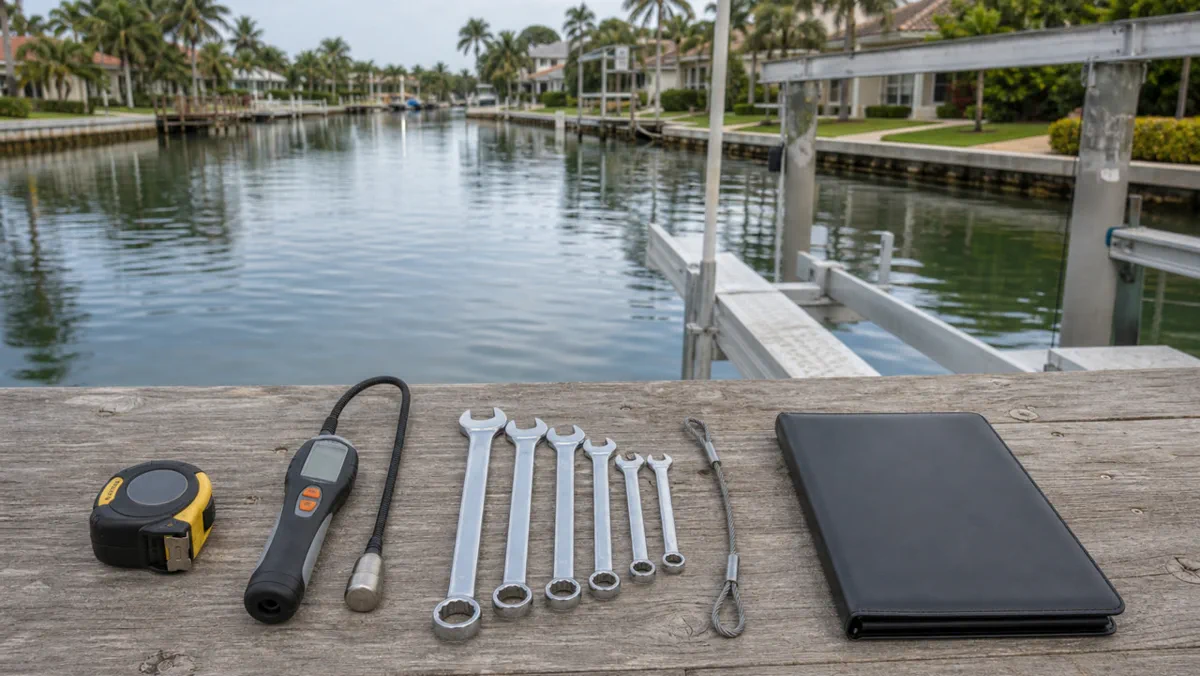
Only take details from safe, stable areas. Do not climb, reach into moving parts, energize equipment, or force a lift to move for a picture.

Say whether the lift is uneven, noisy, stuck, slow, slipping, humming, not responding, or visibly worn. Include when the issue started and whether it is getting worse.
Include the Naples-area neighborhood or nearby community, dock access, gate instructions to discuss later, canal or waterfront context, and whether the property is occupied or seasonal.
Explain whether this is routine service planning, a soon-needed repair, a pre-storm concern, or a post-weather review. Avoid unsupported urgent-response assumptions.
For cable issues, describe visible wear, slack, uneven movement, and whether the cradle sits level. For motor troubleshooting, describe sound, direction, response, stopping, and recent weather or power changes. For bunk and cradle concerns, explain whether the boat position changed, whether hardware looks loose, or whether contact points look worn. For annual service, list any known history, last service timing if known, and how often the lift is used.
If the lift is at a rental or seasonal property, include who can provide access and whether photos can be gathered before scheduling. If HOA or community rules matter, mention that in the request. If you do not know the lift brand, capacity, or age, do not guess; photos and plain-language symptoms are better than inaccurate details.
Boat lifts involve weight, water, mechanical parts, and sometimes electrical components. This site should not tell homeowners to repair those systems themselves. If a cable appears frayed, a cradle is uneven, or a motor is behaving unpredictably, avoid repeated operation and request review. If electrical work, permitting, or marine construction issues are involved, use properly qualified professionals where required.
The purpose of this checklist is better intake, not DIY repair. Good information helps the follow-up conversation happen faster and with fewer basic questions.

Send the basics online, then be prepared to share measurements and access notes during follow-up. Clear details make the next response more useful and reduce back-and-forth.
Local service-area notes
Naples service calls are shaped by more than a map pin. Salt air, waterfront access, hoa dock expectations, canal conditions, storm preparation, seasonal occupancy, and expensive boats sitting on hardware that cannot be treated casually all affect how boat lift repair problems show up and how they should be discussed. A homeowner in a shaded older neighborhood may describe a different symptom than someone in newer construction, a waterfront property, a golf-cart community, or a home with strict HOA rules.
That is why a useful request includes the city or neighborhood and one or two access notes. The first response can then account for local travel patterns, common material wear, storm timing, seasonal demand, and the practical reality of getting someone to the right part of the property.
If the property is in or near Naples, mention whether the issue is near a side yard, roofline, pool enclosure, dock, laundry room, driveway, controller box, service gate, or other specific area. That context makes the callback more useful and prevents a generic answer that sounds fine but does not actually help.
At Naples Boat Lift Repair Pros, we start with the real-world details: the symptom, the location, and the access notes that matter for boat lift repair in Naples.
Do not worry about using perfect terminology. Plain language is better: where the issue is, what it looks or sounds like, when it happens, and whether it changed after storms, heavy use, cleaning, landscaping, travel, seasonal occupancy, or a previous repair. That is enough for a useful first callback.
Do not assume every boat lift repair issue is the worst-case scenario. Also do not assume it is harmless just because it is common in Naples. Local conditions like salt air, waterfront access, HOA dock expectations, canal conditions, storm preparation, and seasonal occupancy can make ordinary wear show up faster. A good next step is calm and specific: confirm the area, understand the symptom, review access, and decide whether the job sounds like a simple service call or something that needs more careful evaluation.
The point of the checklist is to reduce friction. Name, phone, city or area, and a short description are enough to start. More detail can come after the first conversation if it is needed.